Water · Education · Borehole treatment for emergency backup supply
Project snapshot
| Client | Krugersdorp High School |
| Location | Krugersdorp, Gauteng |
| Sector | Education |
| Pillar | Water |
| Solution | Two skid-mounted borehole treatment systems, one for each borehole, for emergency backup supply |
| Treatment | AFM filtration, granular activated carbon (GAC), pH and alkalinity correction, and sodium hypochlorite dosing |
| Installation | October 2026 |
The challenge
Krugersdorp High School requires a reliable borehole water treatment system to provide an emergency backup water supply during municipal water interruptions, using its existing borehole water and storage infrastructure. Laboratory water analyses were conducted on both boreholes. Both produce relatively clear water with low levels of suspended solids, dissolved minerals and metals, but the water has a strong tendency to be corrosive.
The Top Borehole recorded a Langelier Saturation Index (LSI) of −2.20 and the Bottom Borehole −5.00. A negative LSI means the water is undersaturated with calcium carbonate, so it tends to dissolve rather than deposit scale, which makes it aggressive towards metal pipework and fittings. Both boreholes also showed very low alkalinity and hardness, so the water requires treatment before entering the school’s storage and distribution system.
No reverse osmosis or specialised metals-removal stage was considered necessary based on the available results.
The solution
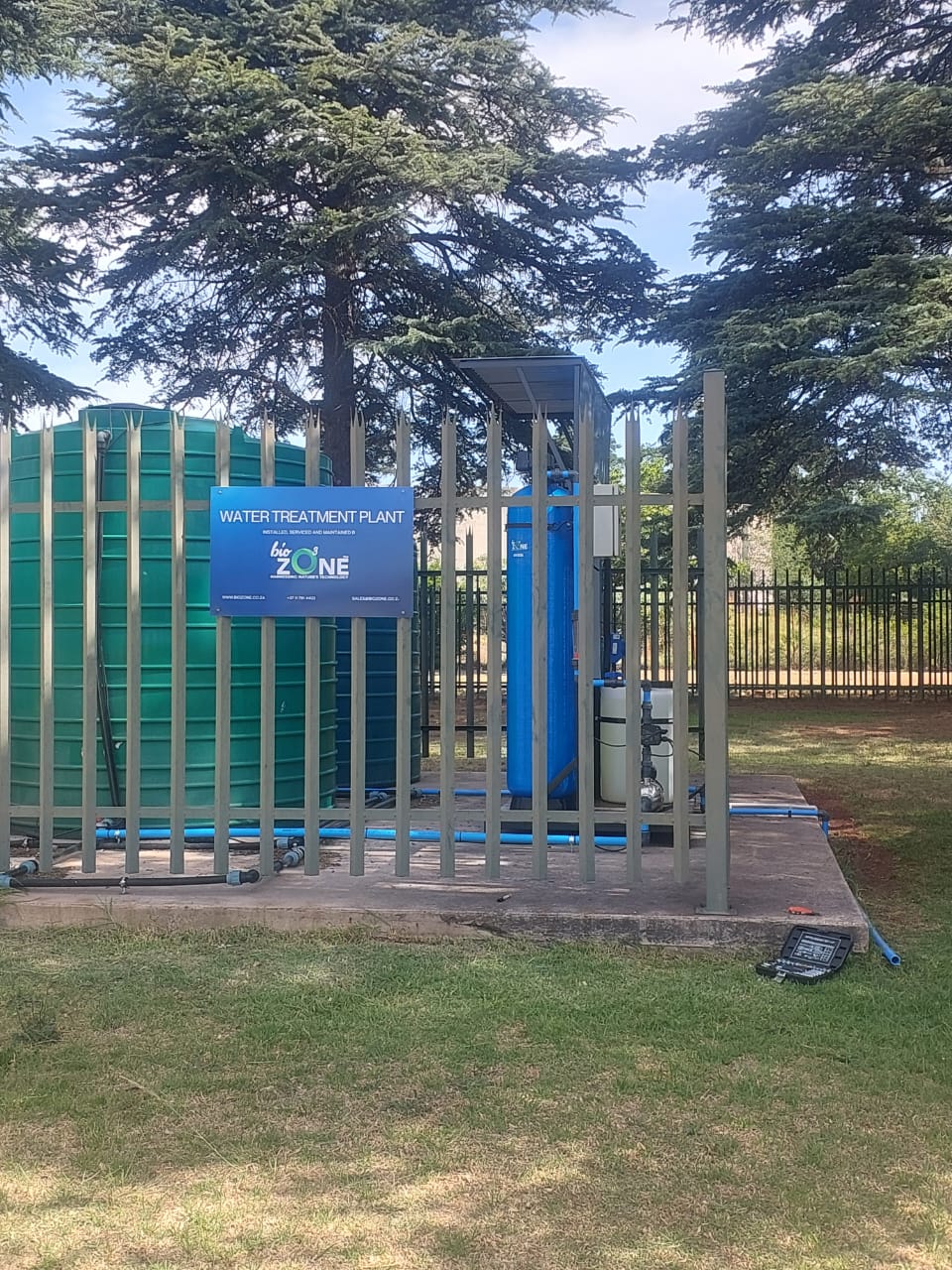
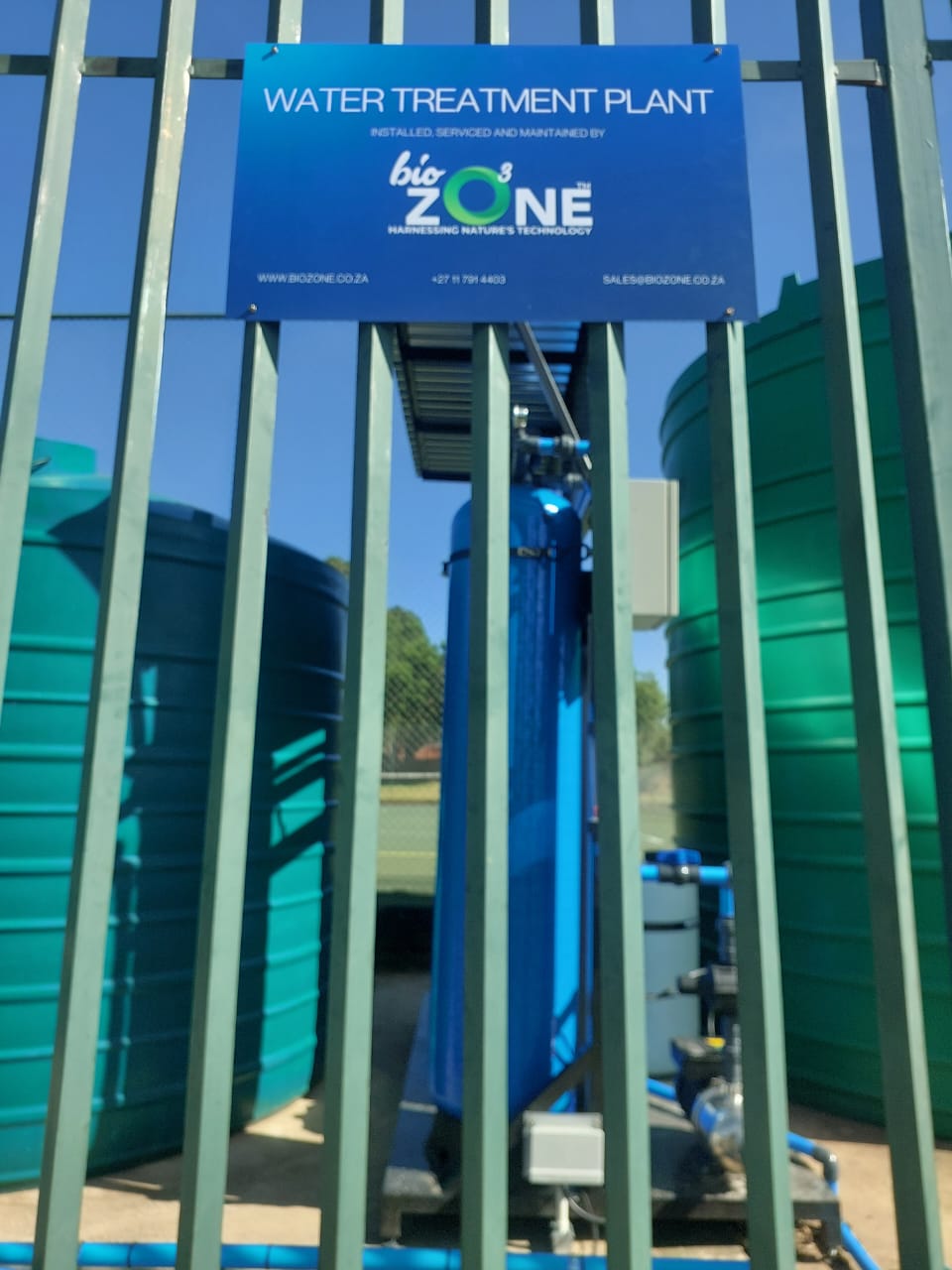
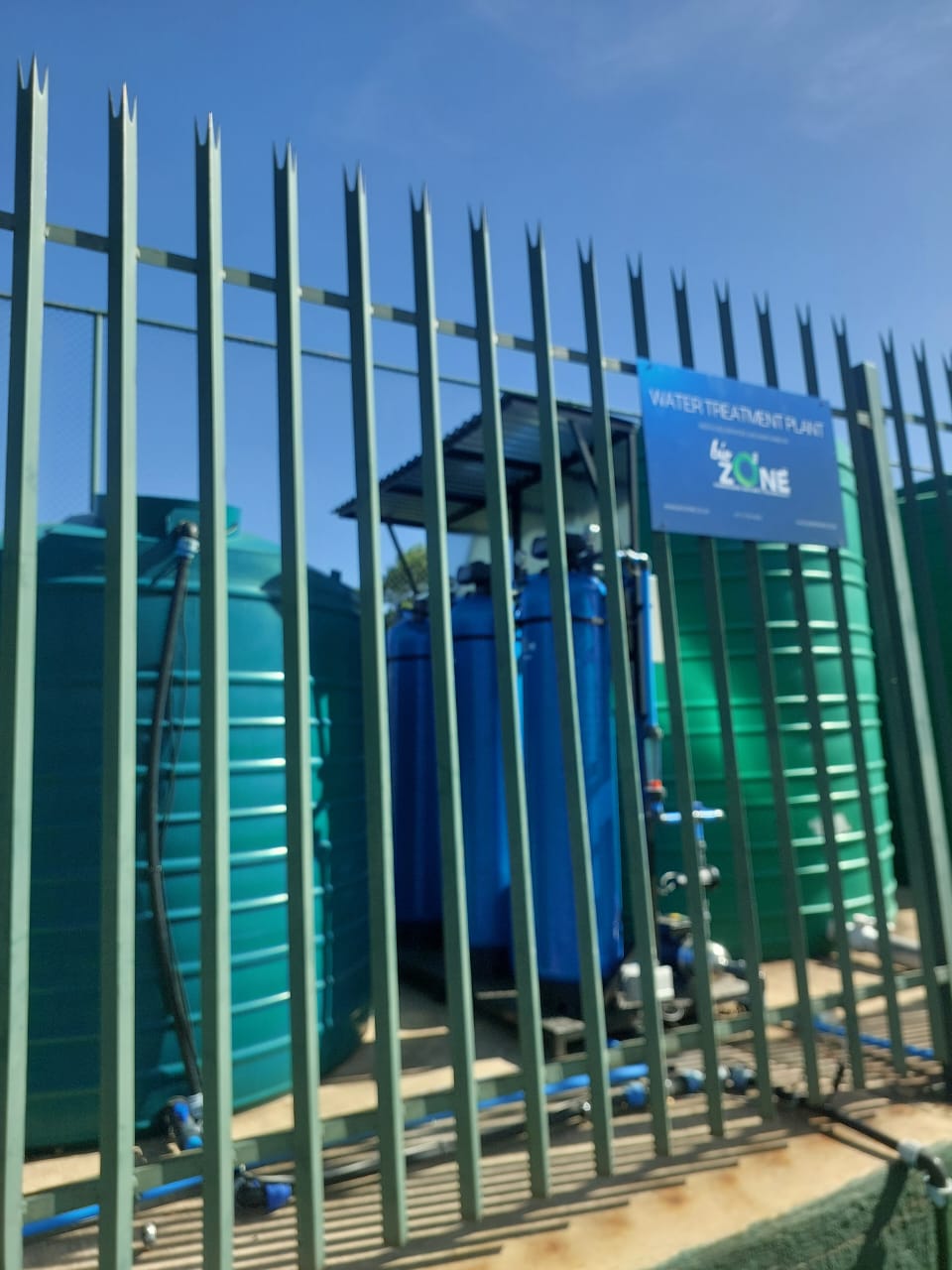
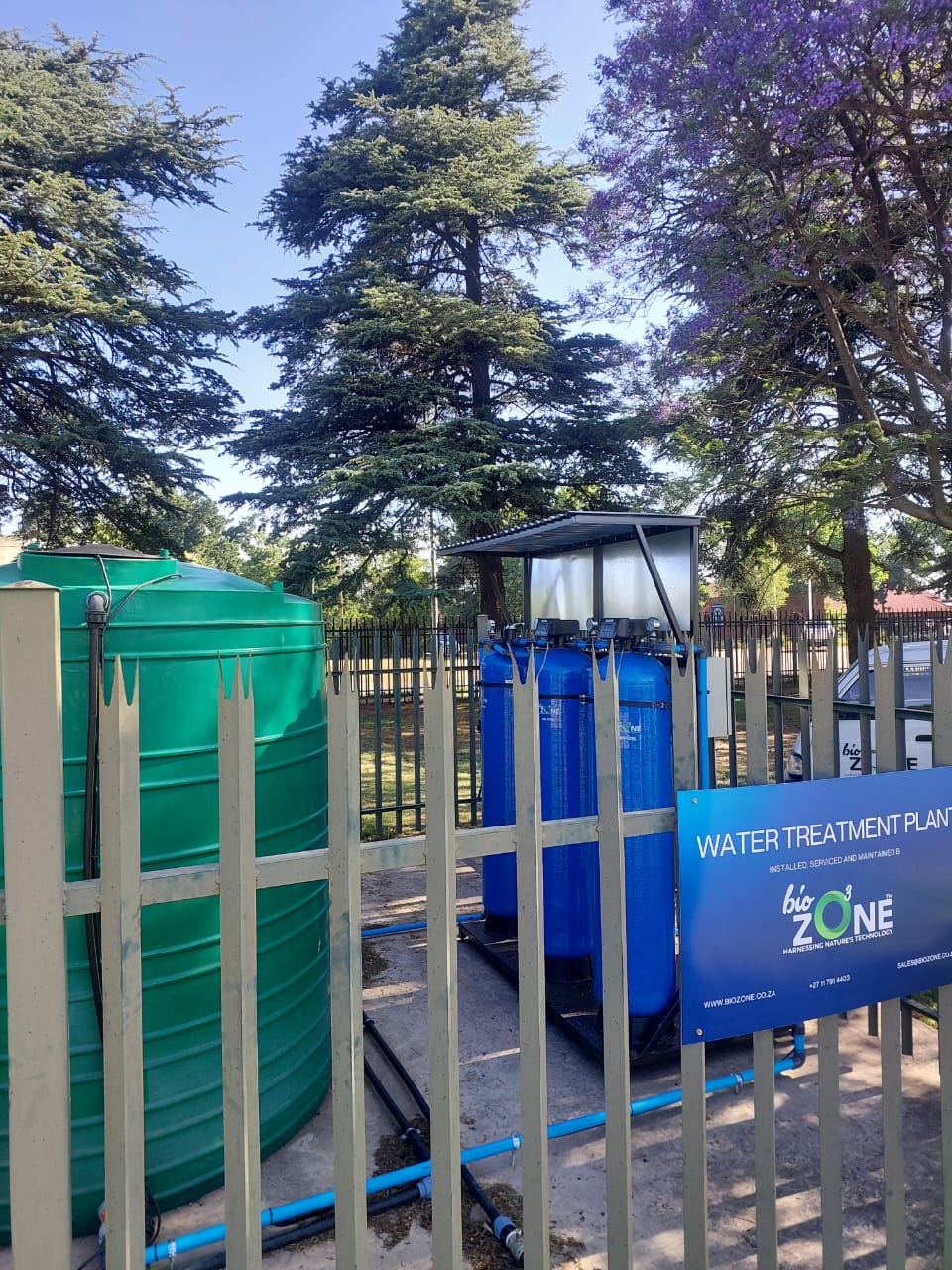
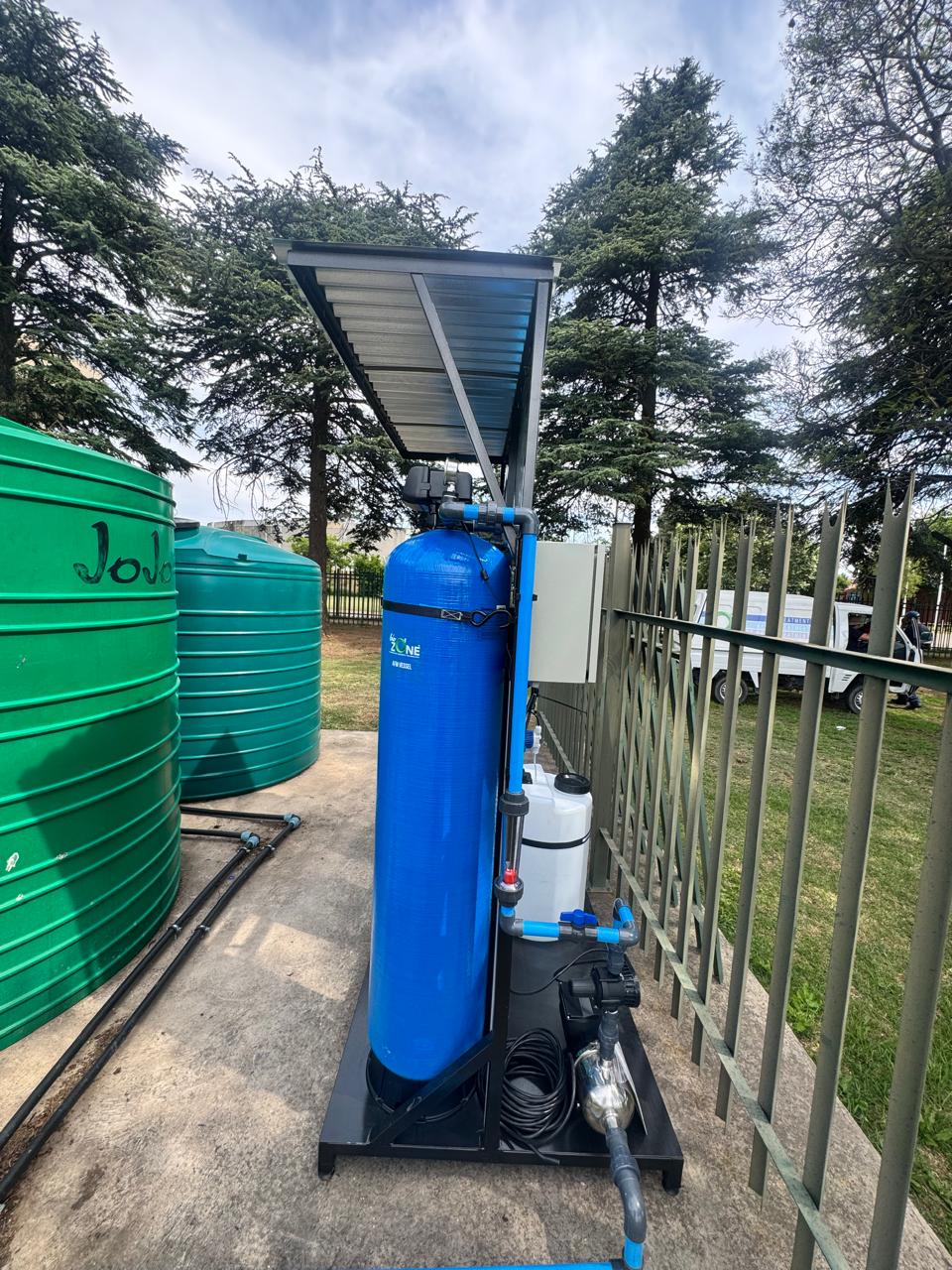
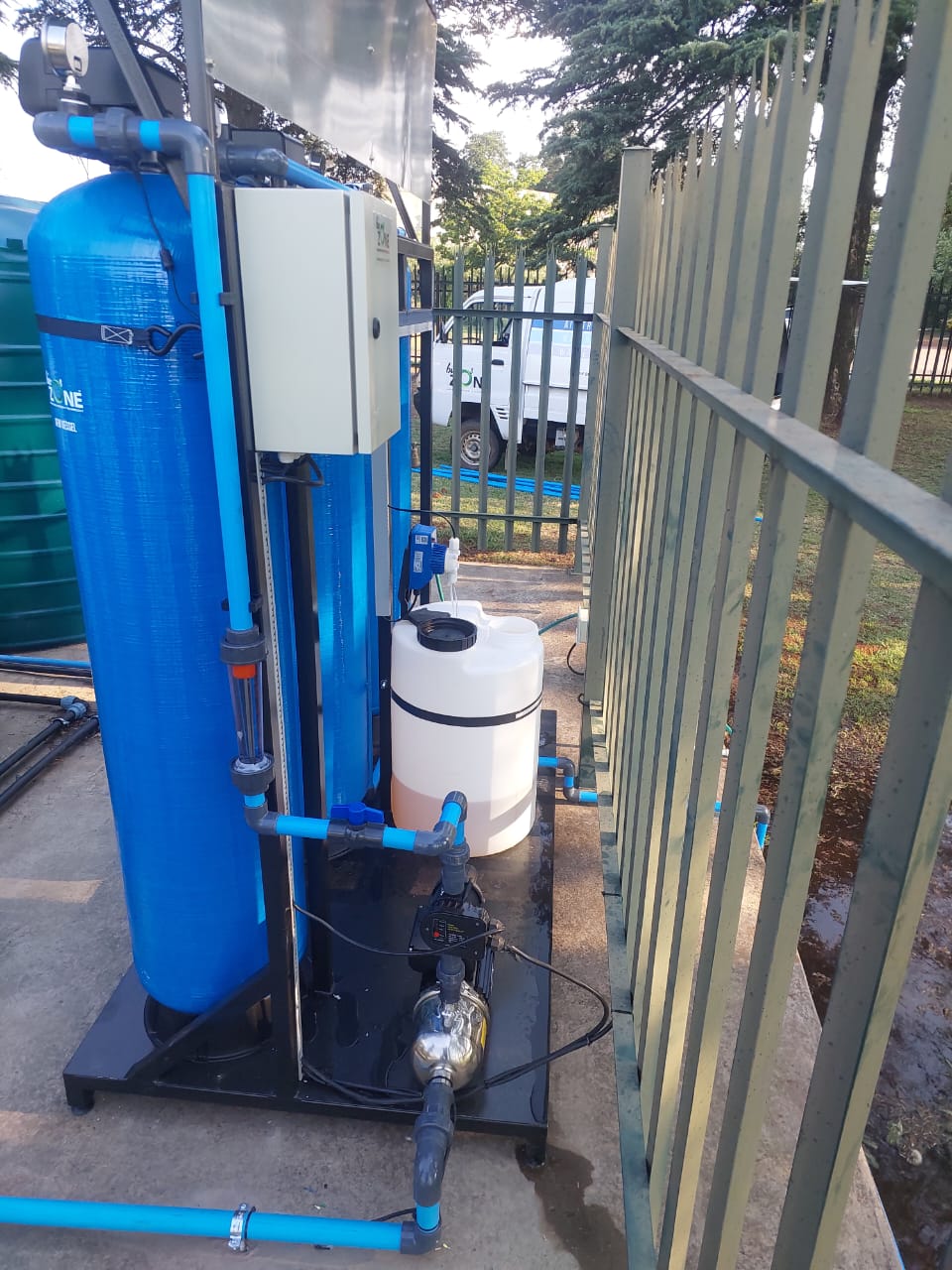
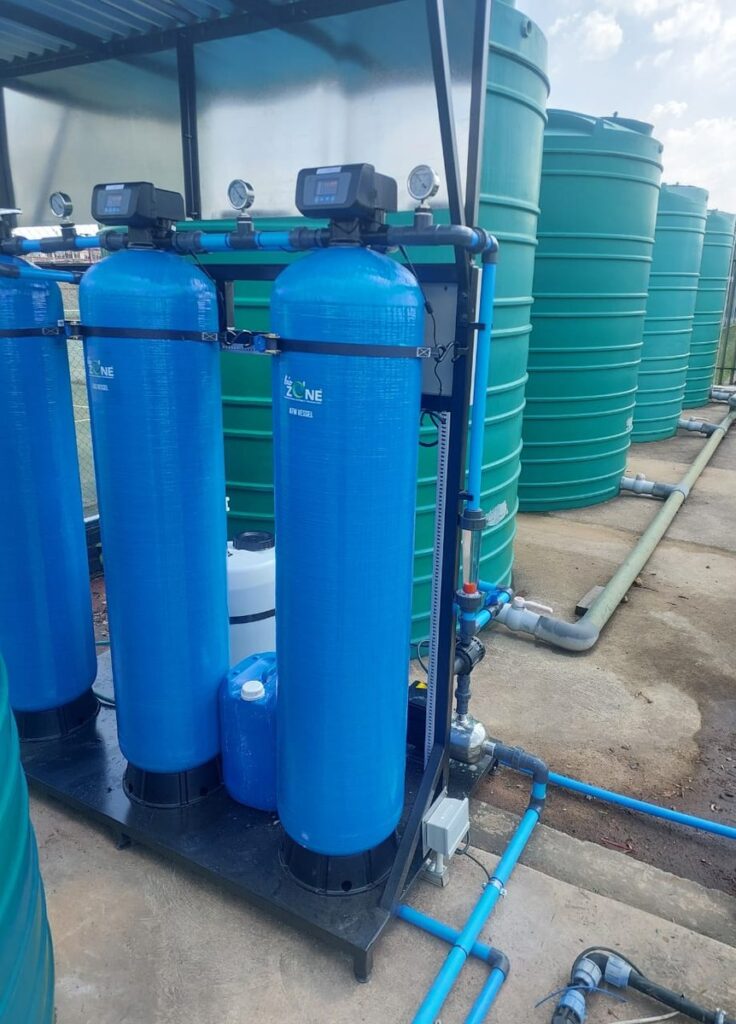
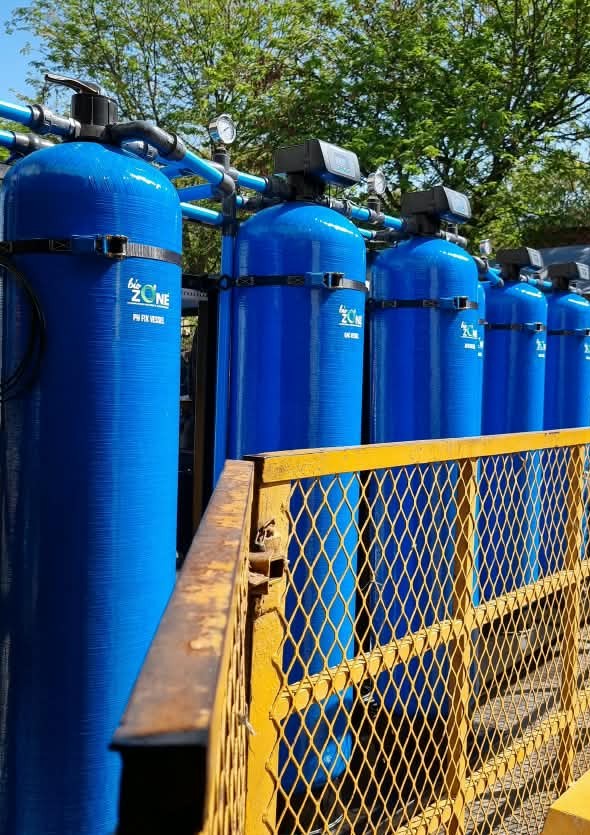
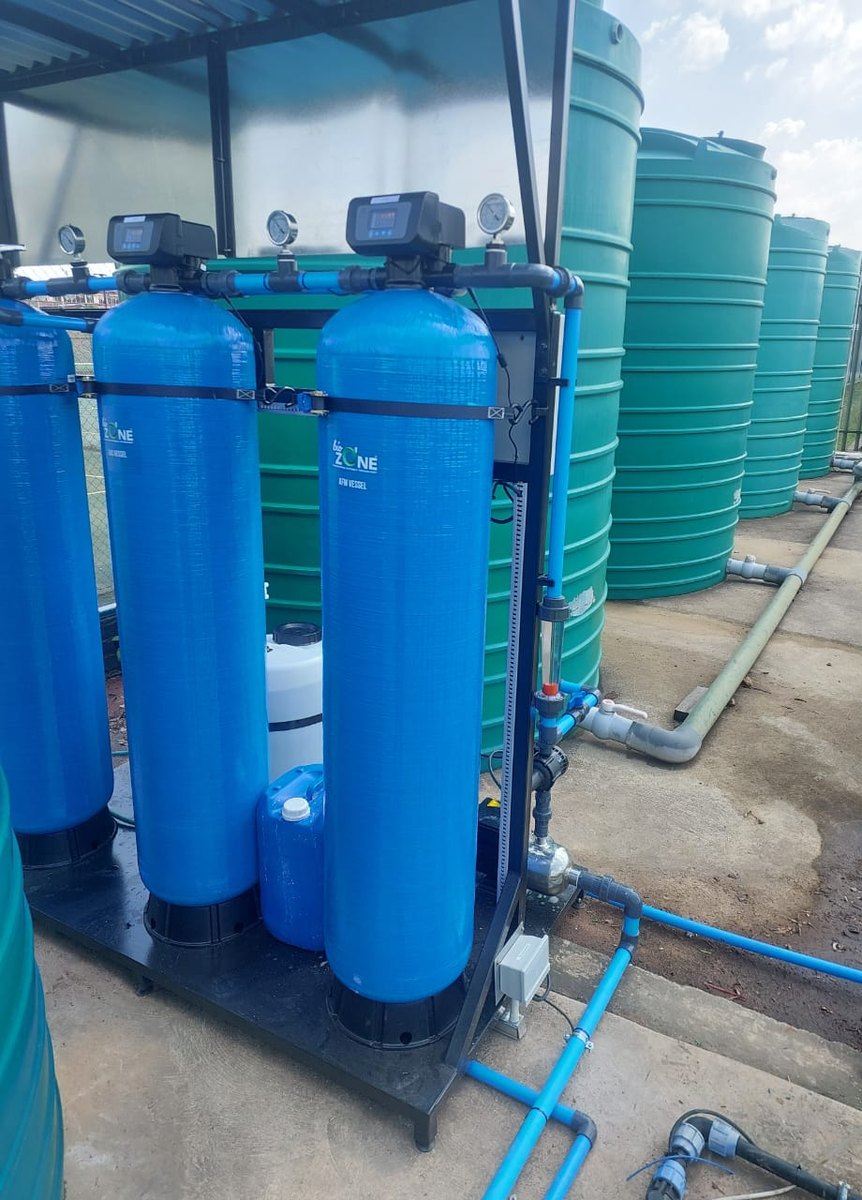
Biozone designed two skid-mounted borehole treatment systems, one for each borehole. Each system combines AFM filtration, granular activated carbon (GAC), pH and alkalinity correction, and sodium hypochlorite dosing:
- Filtration: AFM filtration, fitted with an automatic control valve for scheduled backwashing and rinsing, protects the downstream treatment equipment, storage tanks and school distribution network against sediment accumulation.
- Polishing: Granular Activated Carbon (GAC) as an additional polishing stage.
- Corrosion control: a pH and alkalinity correction stage (pH Fix media) corrects the water’s LSI to reduce its corrosive characteristics.
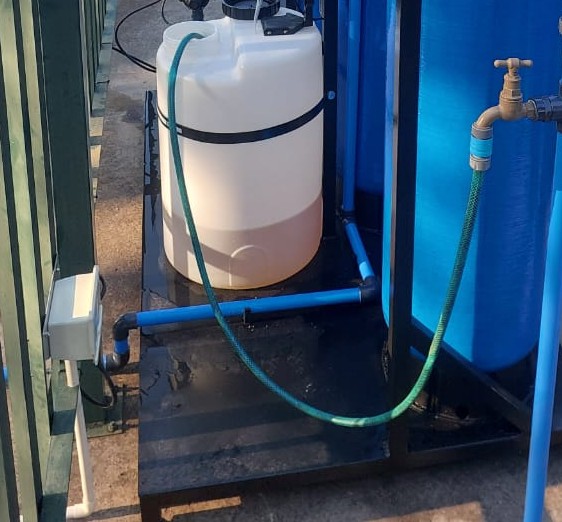
- Disinfection: Sodium Hypochlorite dosing for final disinfection.
- Standby recirculation: Timer-controlled recirculation to reduce stagnation while the system is on standby.
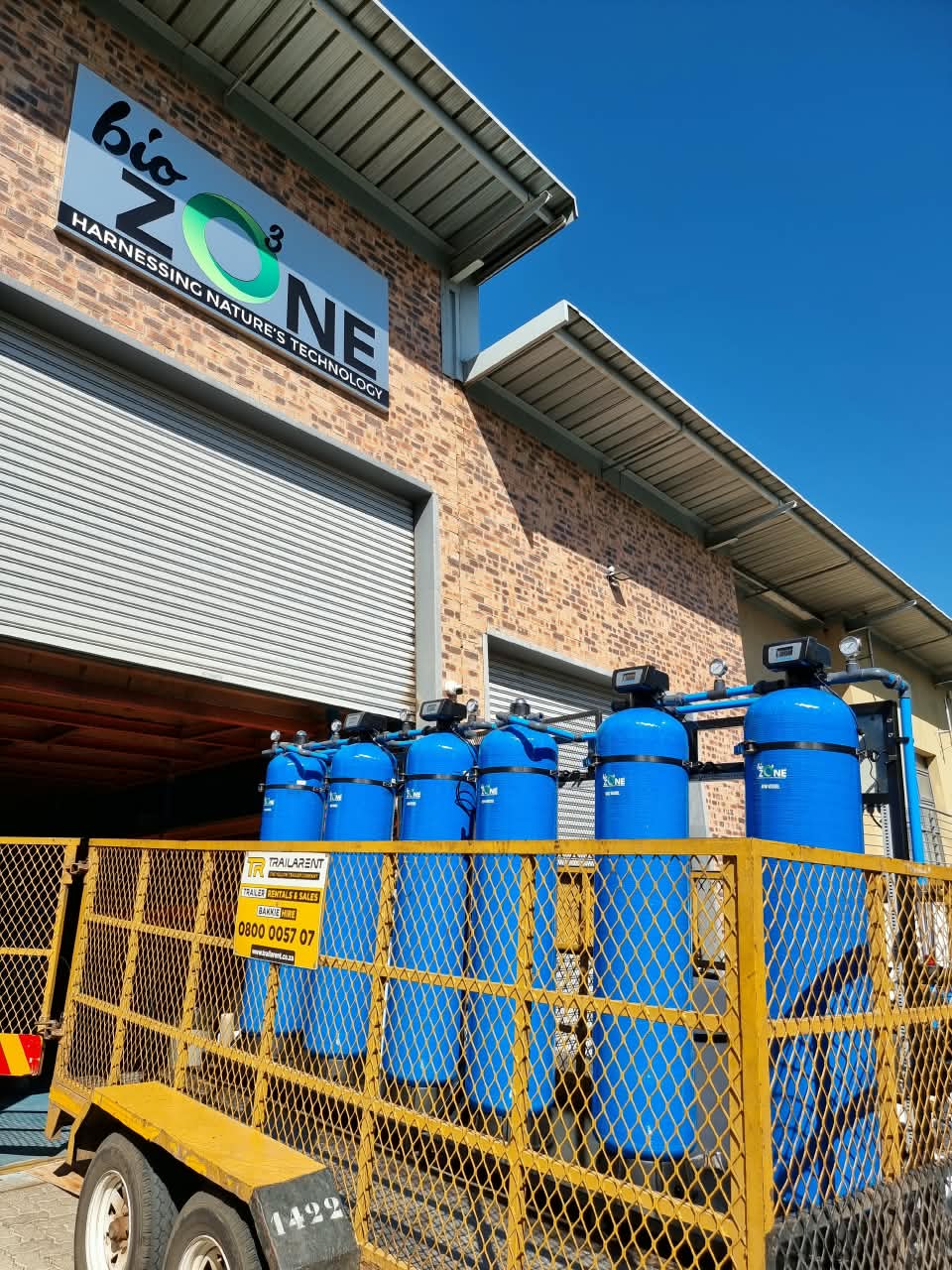
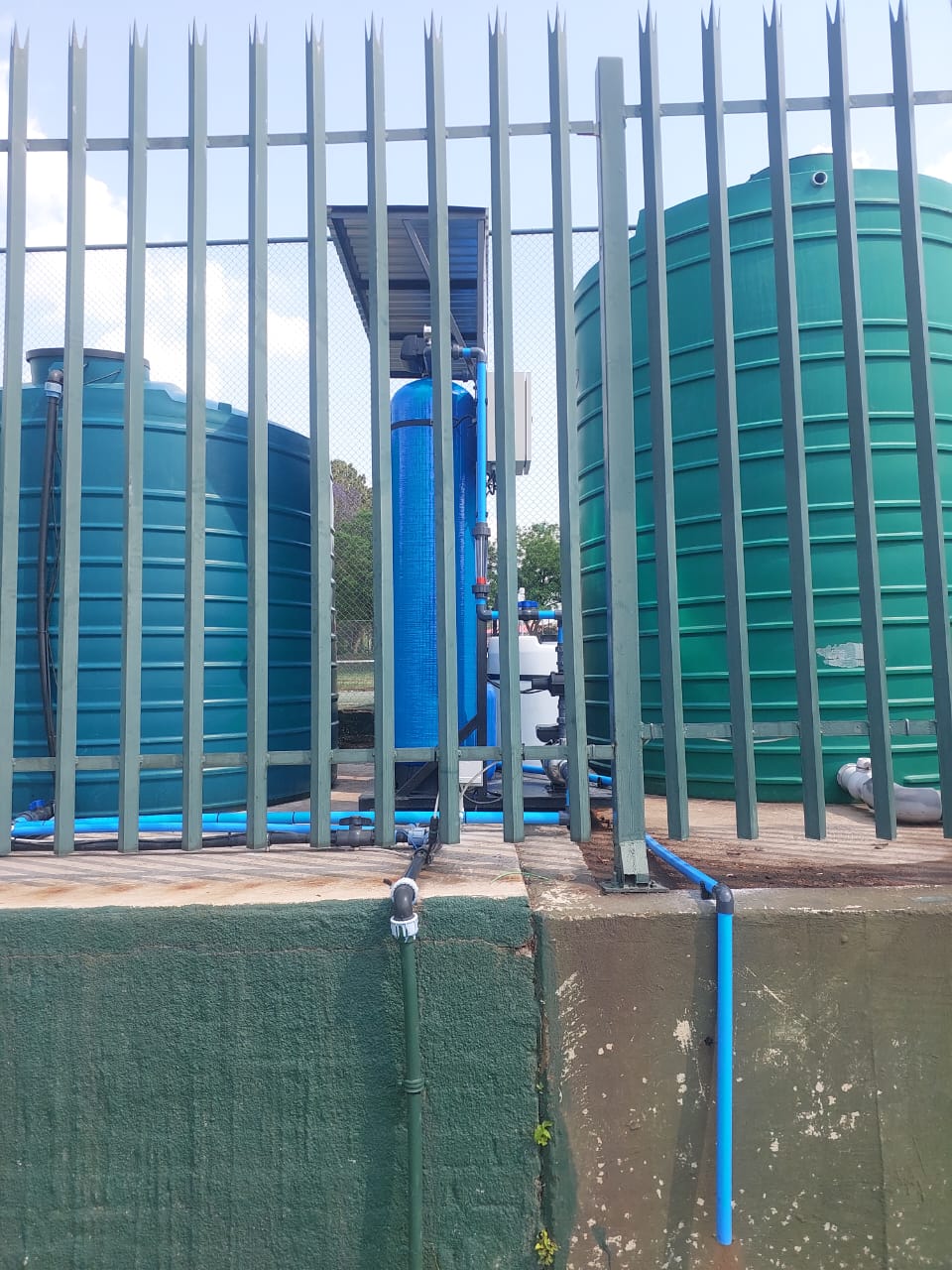
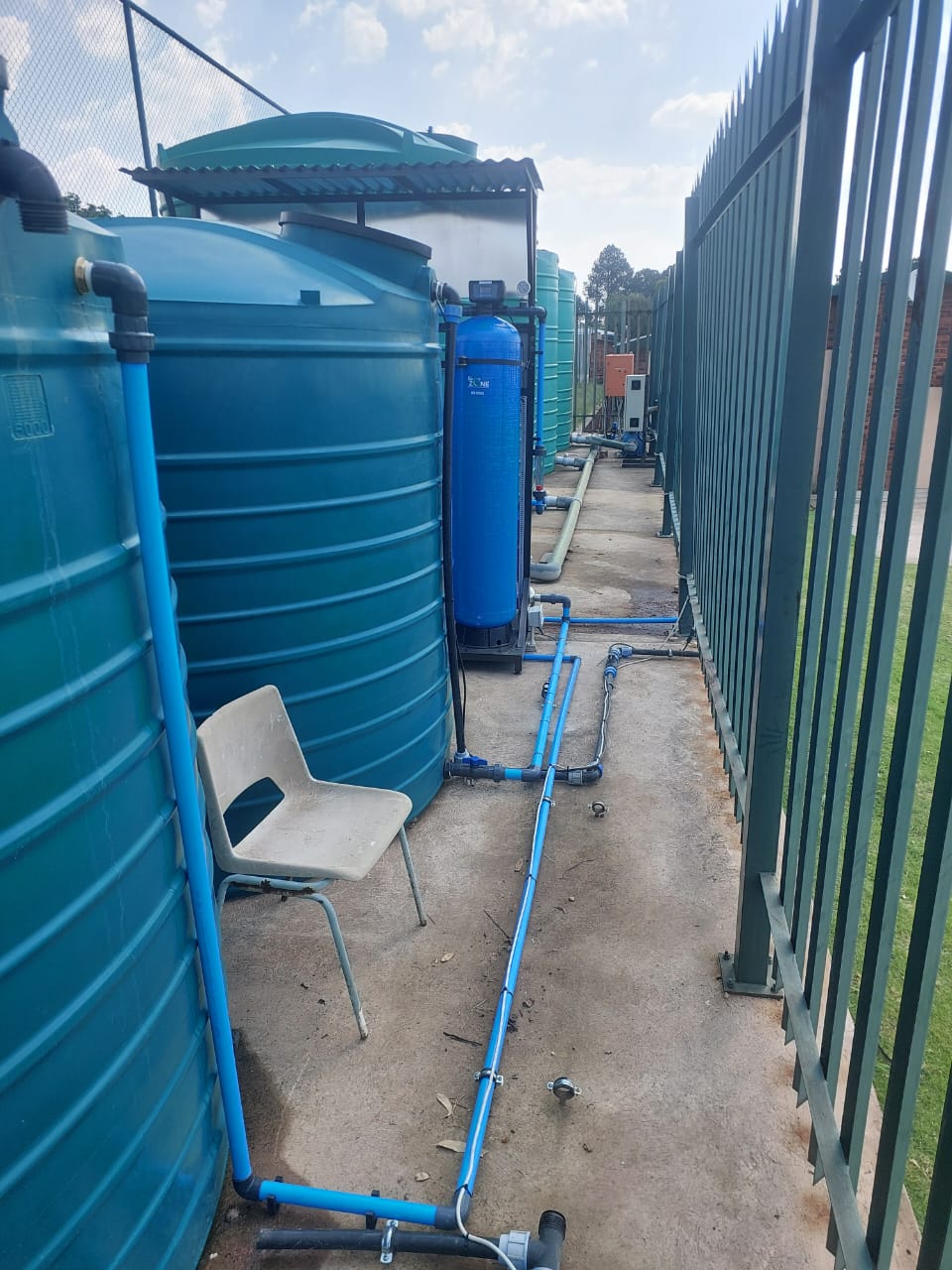
- Skid-built: The stages are assembled on a compact steel skid, then connected to the school’s borehole, storage-tank and recirculation infrastructure.
Design basis
- Two skid-mounted borehole treatment systems, one for each borehole
- A design capacity of 2,000 L/h per skid
- Eight existing 5,000 L tanks, giving 40,000 L of treated backup storage
- AFM filtration, granular activated carbon (GAC), pH and alkalinity correction, and sodium hypochlorite dosing
- Timer-controlled recirculation to reduce stagnation while the system is on standby
- Source water: two existing boreholes (Top Borehole and Bottom Borehole)
Design intent
The system is intended to maintain access to treated water during municipal interruptions and to reduce corrosion risk. It uses the school’s existing boreholes and tanks, and avoids adding an unnecessary RO/reject stream based on the available analysis.
Project photos
Talk to us
To discuss backup water or borehole treatment for your school or facility, contact our engineering team.
[email protected]
+27 67 972 2169
+27 11 791 4403
www.biozone.co.za
Unit 2, Northlands Production Park,
Epsom Avenue,
Hoogland,
Randburg 2162
Biozone Manufacturing (Pty) Ltd
Harnessing Nature’s Technology
Related
- Borehole water treatment systems
- Industrial water treatment and filtration systems
- Boreholes: an off-grid water option
- Ensuring uninterrupted water supply for your business
- All projects