Industrial & Commercial Ozone Generators
Biozone has designed, integrated and applied ozone-based systems across water, air, wastewater, and packaging environments for more than two decades. We don’t sell generic ozone generators. We engineer controlled ozone systems around your airflow, water chemistry, occupancy and compliance requirements.
WHY OZONE?
Ozone (O₃) is one of the most powerful oxidising agents available for treatment processes. Correctly engineered, it delivers effective disinfection, odour control and contaminant reduction without leaving long-term chemical residuals.
Key benefits:
- Powerful oxidation and disinfection performance
- Reduced dependence on harsh chemical dosing
- Effective control of bacteria, viruses, and odour-causing compounds
- Suitable across both air and water treatment environments
- No long-term chemical residuals
What Is an Ozone Generator?
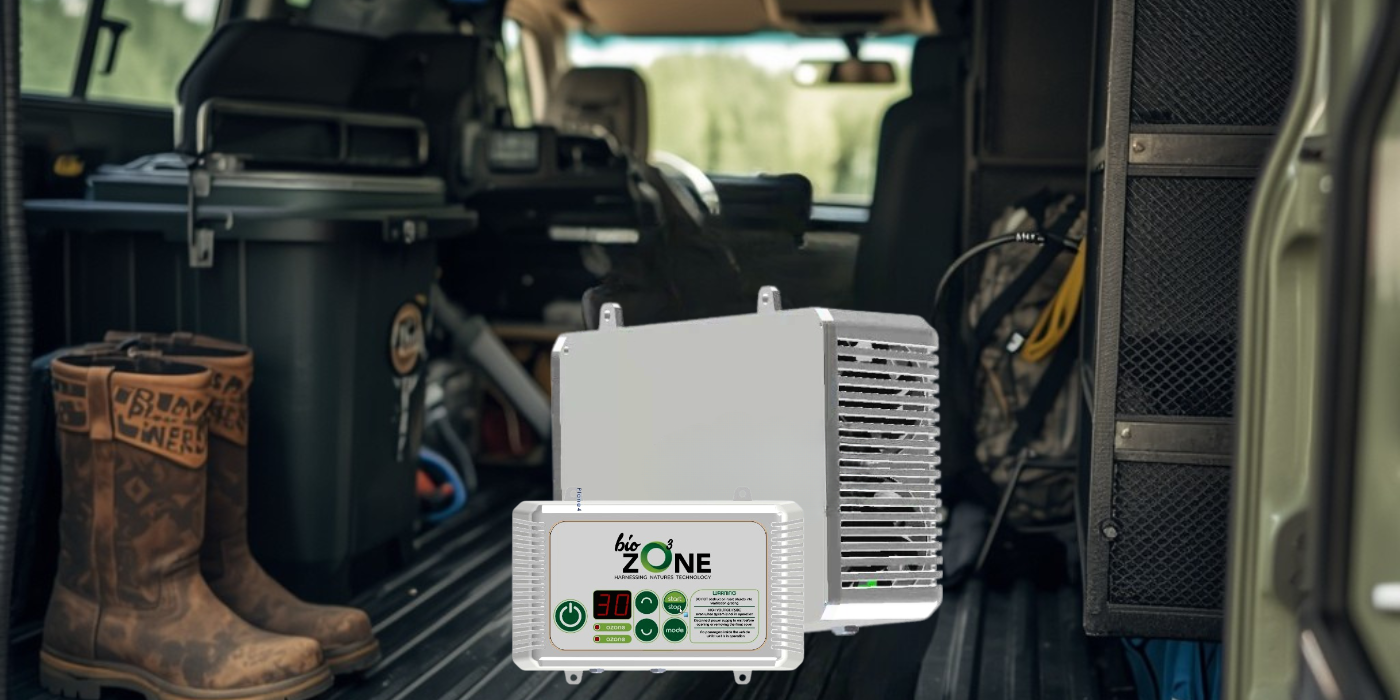
An ozone generator produces ozone gas on-site, on demand, for use in water, air or process disinfection. Ozone is unstable and cannot be stored, so it must be generated at the point of use which is why correct system engineering (not just equipment supply) determines performance, safety and running cost.
Biozone manufactures and engineers its own ozone generation systems in South Africa, giving clients direct access to design, commissioning, spares and long-term support rather than importing generic hardware with no local backup.
OZONE GENERATION TECHNOLOGIES
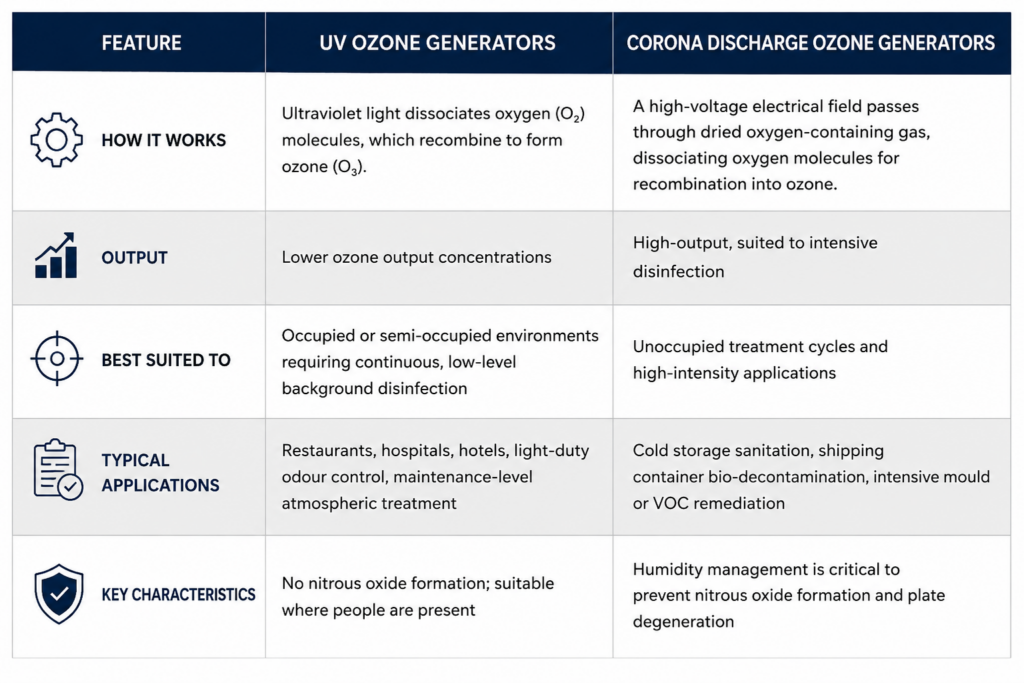
Biozone selects between two core ozone generation technologies based on the environment, occupancy status and treatment objective:
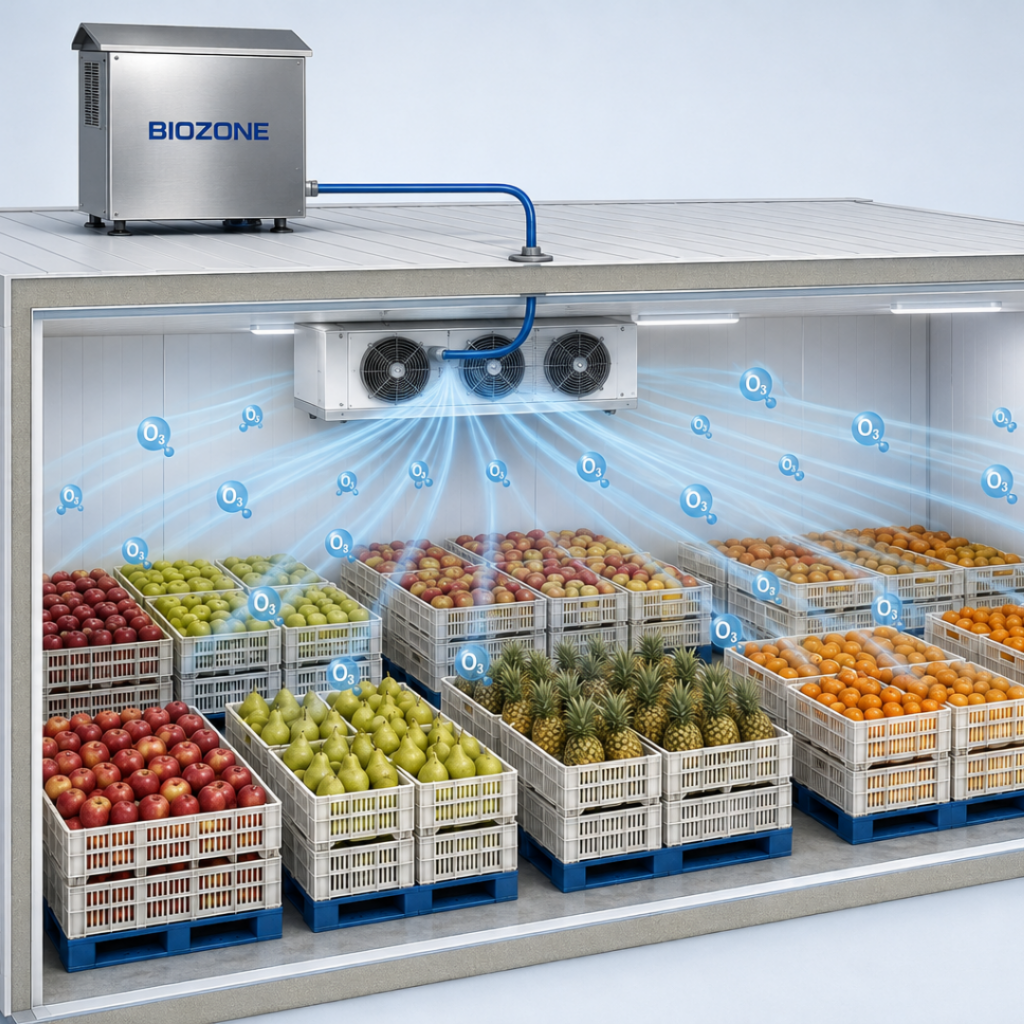
In high-humidity environments (cold rooms, produce storage), Biozone commonly positions the generator outside the treated space, introducing ozone via silicone or PTFE tubing to prevent moisture damage and nitric acid formation.
Feed Gas Options
- Air-fed configurations.
- Oxygen-fed configurations: improved concentration stability and higher ozone yield (selectively applied based on scale and application intensity due to capital cost).
- Dried air configurations: silica gel drying systems, industrial air drier integration.
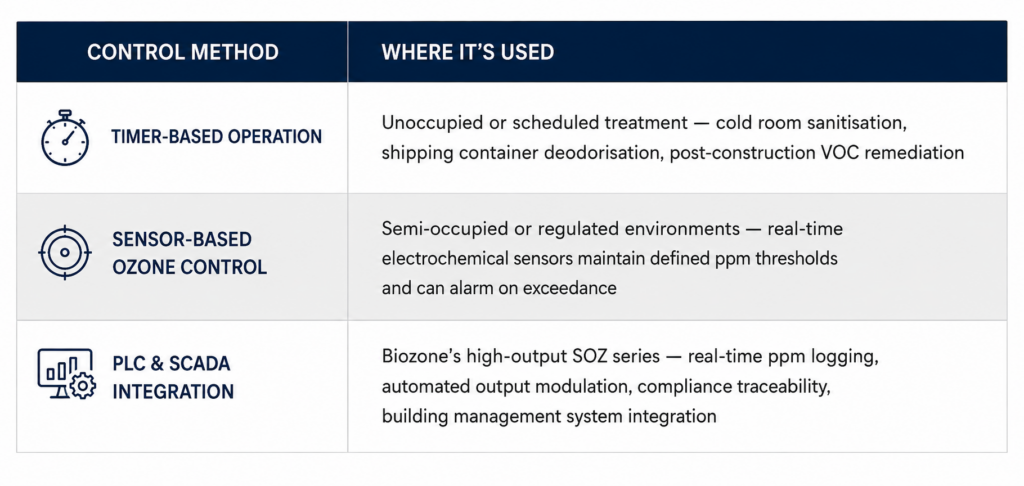
How Biozones Ozone Generatos are controlled
Ozone output is governed by occupancy classification, target contaminant reduction, space volume, air exchange rate and regulatory exposure thresholds, not generation capacity alone.
SAFETY & COMPLIANCE
Ozone exposure management is a primary design parameter in every Biozone air treatment system.
- Handheld ozone monitors (e.g. Dräger Pac 8000) used for validation during commissioning and maintenance.
- Wall-mounted sensors in larger installations detect leakage, trigger alarms, and can automatically shut down generation.
- Thermal ozone destruction and catalytic ozone destruct units convert residual ozone (O₃) back to oxygen (O₂) before discharge used where high-output generators operate indoors or ozone off-gas is present.
- Systems engineered to recognised occupational exposure standards for the installation environment.
WHERE OZONE TECHNOLOGY IS APPLIED
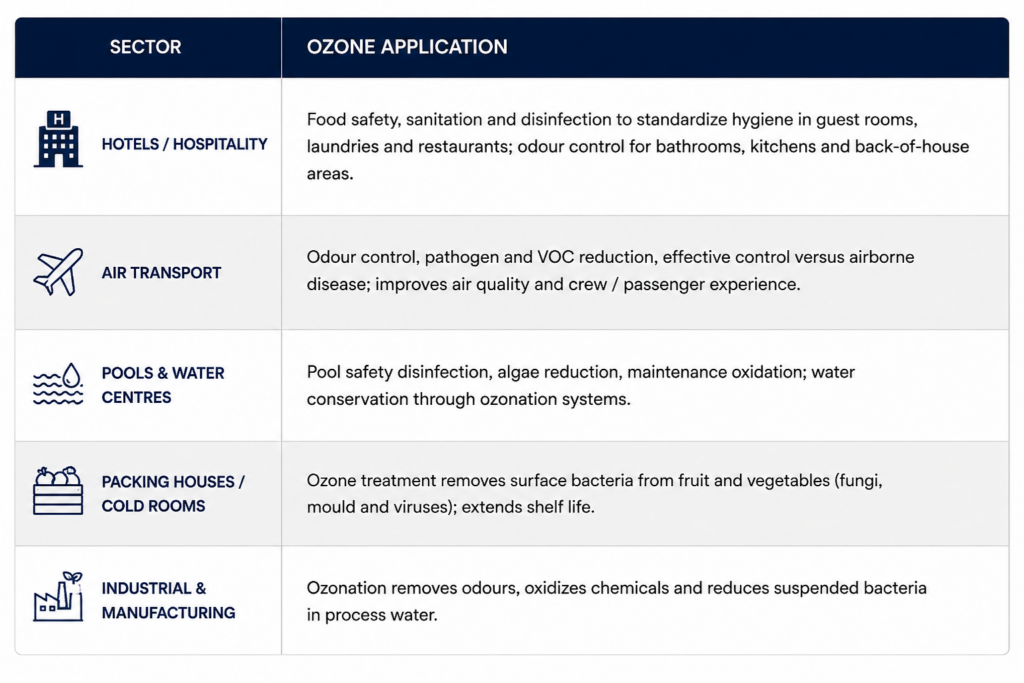
Ozone generation underpins all four of Biozone’s solutions :
Frequently Asked Questions
What’s the difference between UV and corona discharge ozone generators?
UV systems produce lower-concentration ozone and are typically used in occupied or semi-occupied spaces for continuous background disinfection. Corona discharge systems produce high-output ozone for intensive, unoccupied treatment cycles such as cold storage sanitation or mould remediation.
Is ozone safe to use around people?
Yes, when engineered correctly. Biozone designs every system around occupancy classification and recognised occupational exposure thresholds, using sensor-based control, alarms, and where required ozone destruct units to neutralise residual ozone before discharge.
Can ozone generators be integrated with existing building or plant control systems?
Yes. Biozone’s high-output SOZ series integrates with PLC and SCADA systems for real-time monitoring, automated output modulation and compliance traceability. Smaller standalone systems operate via engineered timer logic.
What industries use Biozone ozone generators?
Mining, food processing and packhouses, cold storage and logistics, water bottling and beverage manufacturing, hospitality and aquariums, wastewater treatment, pharmaceutical and healthcare environments.